




Hydrogen’s Rapid Rise and Digital Blind Spots
Green hydrogen is emerging as a cornerstone of next-generation energy systems. Under Net Zero scenarios, the IEA forecasts that global electrolyzer capacity will grow from almost 3 GW in 2023 to over 560 GW by 2030, representing nearly a 20-fold increase within this decade.
Decarbonization mandates, public-private investments, and energy security strategies across regions, including the EU, India, the US, and the Middle East, drive this scaling. Flagship programs such as Saudi Arabia’s NEOM, Europe’s Hy24, and India’s National Green Hydrogen Mission are catalyzing utility-scale deployments.
However, a major gap remains in digital readiness. Over 70 percent of green hydrogen projects announced for 2023 had not advanced to operational status, underscoring systemic challenges in execution, including gaps in digital operations and monitoring frameworks.
Specifically, a Nature review found that only 7 percent of initially announced green hydrogen capacity was realized by 2023. This implementation shortfall highlights why hydrogen-ready O&M platforms, including predictive hydrogen maintenance and hydrogen project telemetry, are becoming essential requisites, not just strategic advantages.
Many EPC firms and asset managers still rely on legacy SCADA systems, originally designed for solar photovoltaic (PV), wind, or BESS deployments. These tools cannot address the unique operational telemetry, high-frequency control needs, and real-time risk parameters inherent to hydrogen systems. The result is data silos, non-standardized control logic, and dangerously shallow visibility.
Hydrogen’s Operational Complexity Demands Specialized Infrastructure
Hydrogen introduces multi-dimensional complexity. Electrolyzers, fuel cells, and associated systems operate under tight tolerances for temperature, flow rate, voltage, pressure, and chemical purity. Unlike traditional PV inverters or battery cells, these components degrade dynamically and asymmetrically based on thermal stress, impurities, and variable demand profiles.
Key technical challenges include:
- Hydrogen project telemetry: Second-by-second tracking of flow, voltage, and thermal characteristics.
- PEM and alkaline electrolyzer degradation modelling: Impacted by humidity, ambient heat, and stack design.
- Fuel stack lifecycle tracking: Essential for warranty compliance and performance prediction.
- Hybrid asset orchestration: Coordinating solar, BESS, and hydrogen load profiles requires predictive control that conventional SCADA tools lack.
- Compressor and purification loop telemetry: Missed alerts here can lead to catastrophic downtime.
Without real-time hydrogen analytics and digital twin simulation, these systems are flying blind. Poor SoC (state of charge) transitions between BESS and hydrogen assets can result in missed arbitrage windows, energy losses, and compliance penalties.
Real-World Failures Highlight the Cost of Inaction
The lack of hydrogen-ready digital O&M tools is already costing operators millions and stalling projects at scale:
- Nature Energy (2023) reported that only 7% of announced green hydrogen capacity had become operational by the end of that year, underscoring execution bottlenecks including the absence of integrated telemetry, digital twin models, and predictive O&M platforms.
- In California, a 2023-24 hybrid project integrating wind, BESS, and hydrogen recorded an estimated $870,000 in annualized revenue loss due to inefficient SoC calibration. The BESS discharged during off-peak periods, leaving the electrolyzer underutilized during premium pricing windows—no predictive asset orchestration had been deployed.
- According to the National Renewable Energy Laboratory (NREL), 30% of surveyed green hydrogen projects in 2024 lacked real-time degradation tracking, resulting in voided warranties and increased insurance premiums for over 10% of operators. These omissions were primarily due to reliance on legacy SCADA frameworks that lack hydrogen-specific diagnostics.
These failures aren’t isolated; they represent systemic flaws in the current digital readiness of hydrogen infrastructure. Without predictive hydrogen analytics, hybrid asset coordination, and fault detection models, operational inefficiencies will persist and scale exponentially.
Building a Hydrogen-Grade Digital Backbone
To bridge the widening gap between hydrogen asset growth and operational readiness, energy operators must adopt hydrogen-specific digital O&M platforms designed to handle the unique complexities of this evolving asset class. Unlike solar or battery energy storage systems (BESS), hydrogen systems operate within far narrower margins for error and require real-time orchestration across multiple interdependent components, from electrolyzer stacks and purification units to compressors, cooling loops, and fuel cell arrays.
Conventional telemetry platforms designed for solar PV or BESS lack the depth and frequency required for second-by-second hydrogen stack monitoring. They are unable to capture high-resolution sensor data across critical vectors like electrolyte temperature variance, hydrogen purity levels, system backpressure, flow irregularities, and cathode/anode potential drift, all of which can cascade into efficiency loss or catastrophic downtime if left unaddressed.
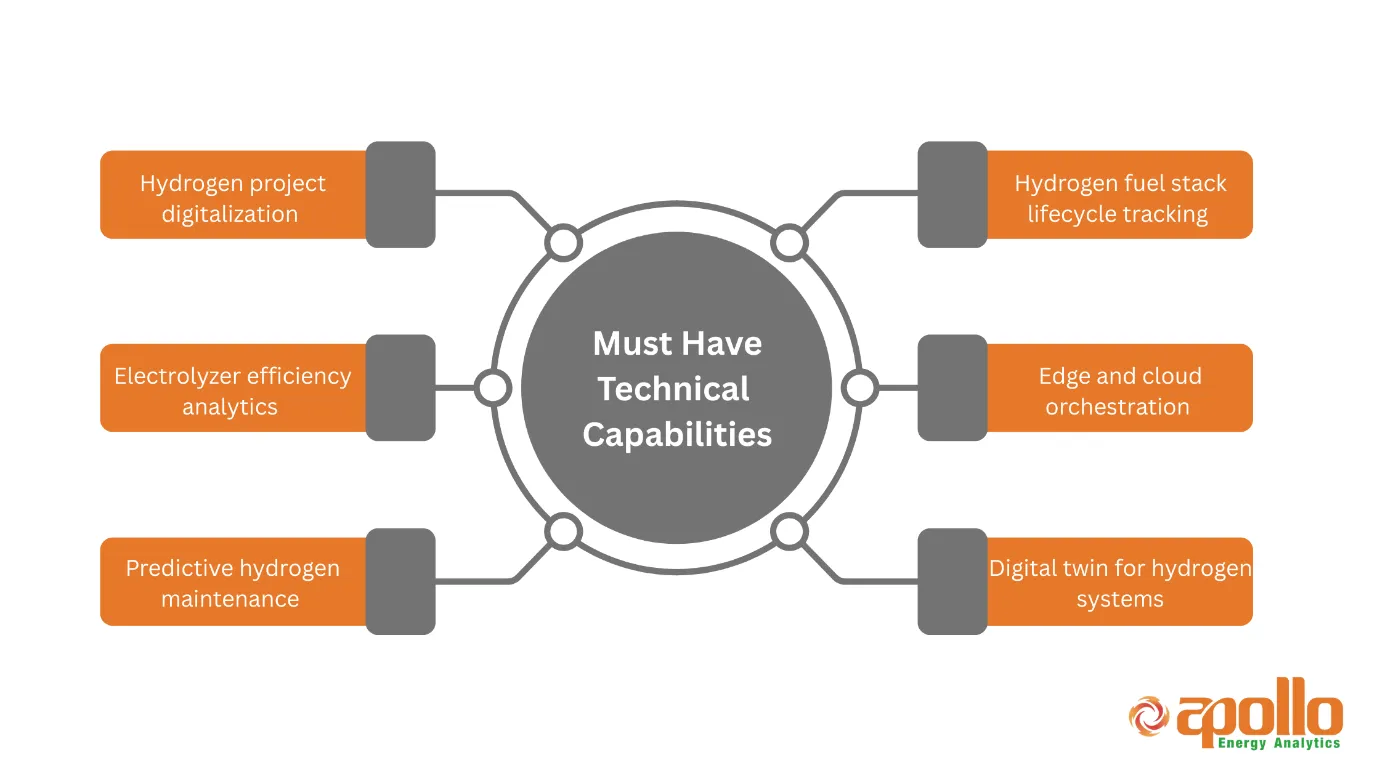
Must-have technical capabilities include:
- Hydrogen project digitalization with modular sensor ingestion from compressors, stacks, and purification systems.
- Electrolyzer efficiency analytics powered by real-time data and historical curve models.
- Predictive hydrogen maintenance using machine learning algorithms tuned to PEM-specific failure signatures.
- Hydrogen fuel stack lifecycle tracking integrated into CMMS platforms for automated ticketing.
- Edge and cloud orchestration to ensure fast, local response and scalable central oversight.
- Digital twin for hydrogen systems, simulating full-stack behavior under variable load, thermal drift, and impurity levels.
For hybrid asset portfolios, platforms must also offer SoC/SoH synchronization across solar, wind, BESS, and hydrogen assets through a unified, hydrogen-ready CMMS solution.
While Apollo Energy Analytics currently specializes in O&M analytics for solar, wind, and BESS, our roadmap is aligned with the evolution of hydrogen infrastructure. Our platform architecture is modular and built to scale with emerging asset classes that demand real-time data, predictive intelligence, and operational precision.
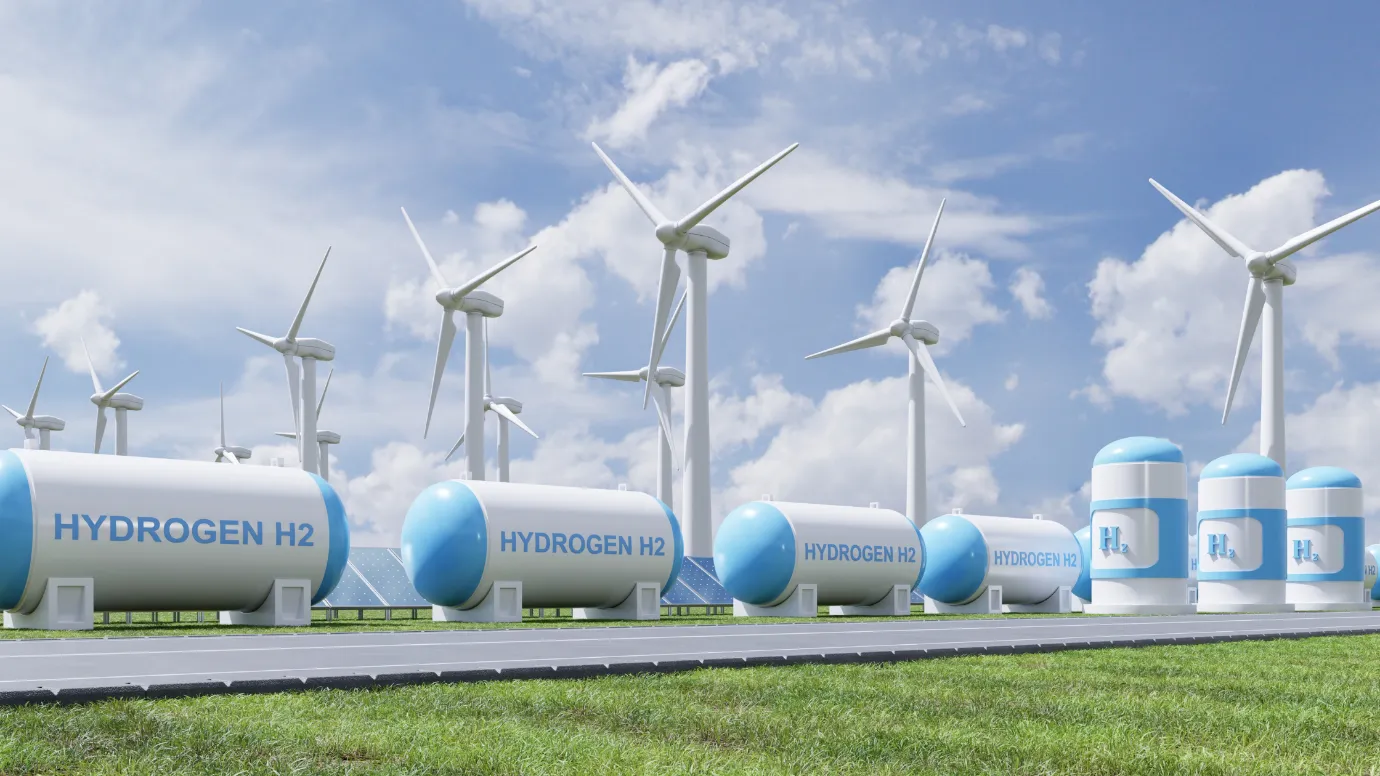
Hydrogen Is Coming. Are You Ready?
Green hydrogen is no longer speculative, it’s a maturing asset class that demands specialized tools, deeper operational insight, and robust performance monitoring. Treating hydrogen like just another containerized asset is a strategic error.
Operators, EPCs, and investors who fail to upgrade their infrastructure for hydrogen-scale complexity risk:
- Thermal events due to latency in cooling telemetry
- Missed arbitrage profits from inefficient load balancing
- Warranty claim rejections due to incomplete degradation data
- Increased risk exposure and safety non-compliance
The energy future is hybrid, modular, and data-first. Whether your firm is building out hydrogen capability now or planning for 2026+, the time to upgrade your O&M infrastructure is now.



Leave a Reply